What you owe, what it costs, what's due.
Bank loans, debentures, CRIs, securitizations and intercompany loans in a single debt map. Outstanding balance, interest and schedule are recalculated every day by a calculation engine, not a spreadsheet.
The group's entire debt, without a single copied cell.

A debt map that updates itself
Outstanding balance, accrued interest, inflation adjustment and maturities recalculated daily for every operation, using the official indexes: CDI, IPCA, TLP, SOFR and TR.

Set up in minutes, not days
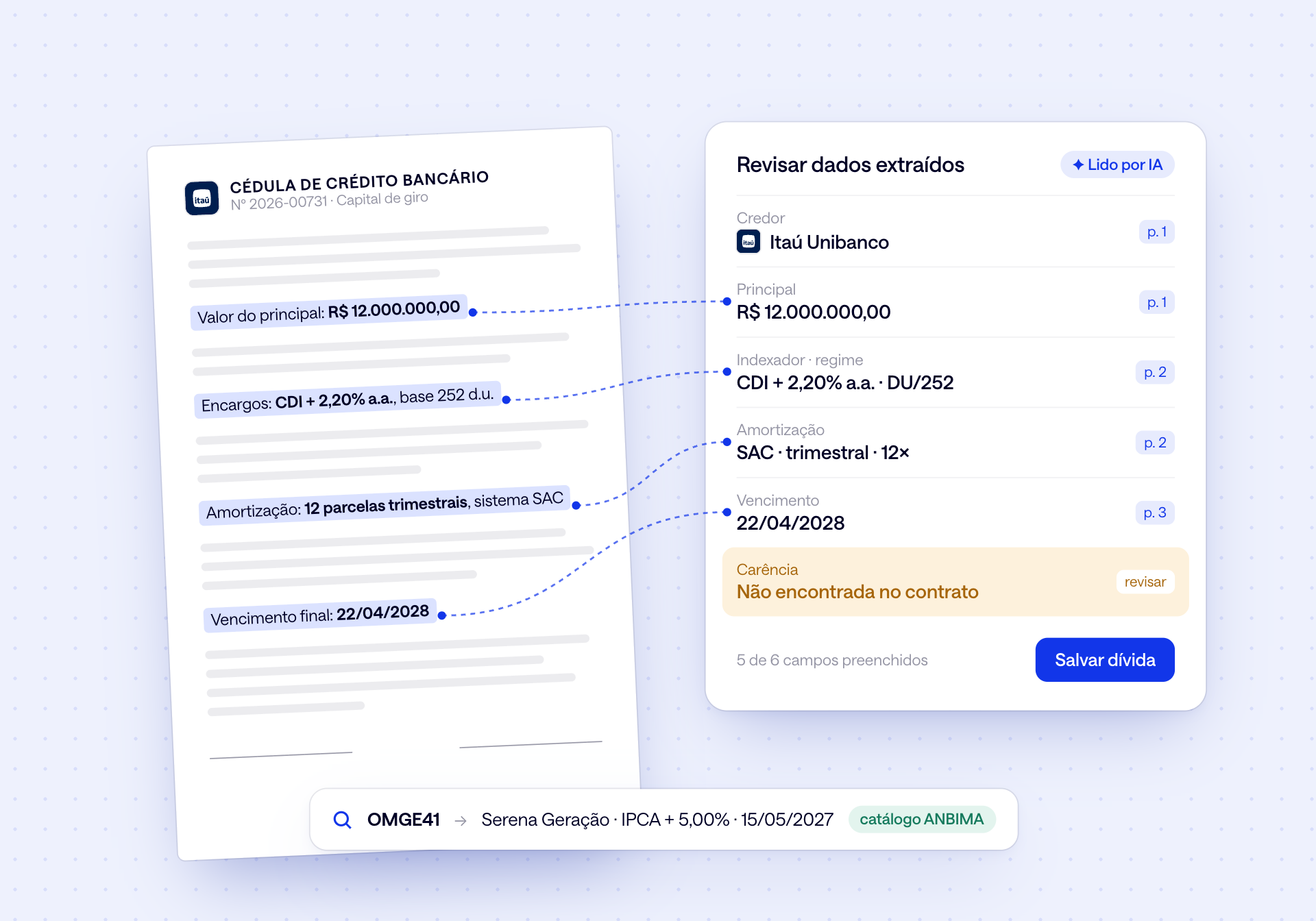
Debentures and CRIs arrive pre-filled from the series code via the ANBIMA catalog. Bank contracts in PDF are read by AI and turned into a record for you to review.

No covenant takes you by surprise
Every obligation is re-evaluated with each new event and watched every day: the alert arrives before the breach, not after.
From contract to month-end close.
Three steps, and your debt starts managing itself
1. Register by code or by contract
Type the series code and the security arrives pre-filled from the ANBIMA catalog: issuer, index, spread, maturity and trustee. For bank loans, upload the contract PDF and review the extracted fields before saving.
2. The engine calculates, every day
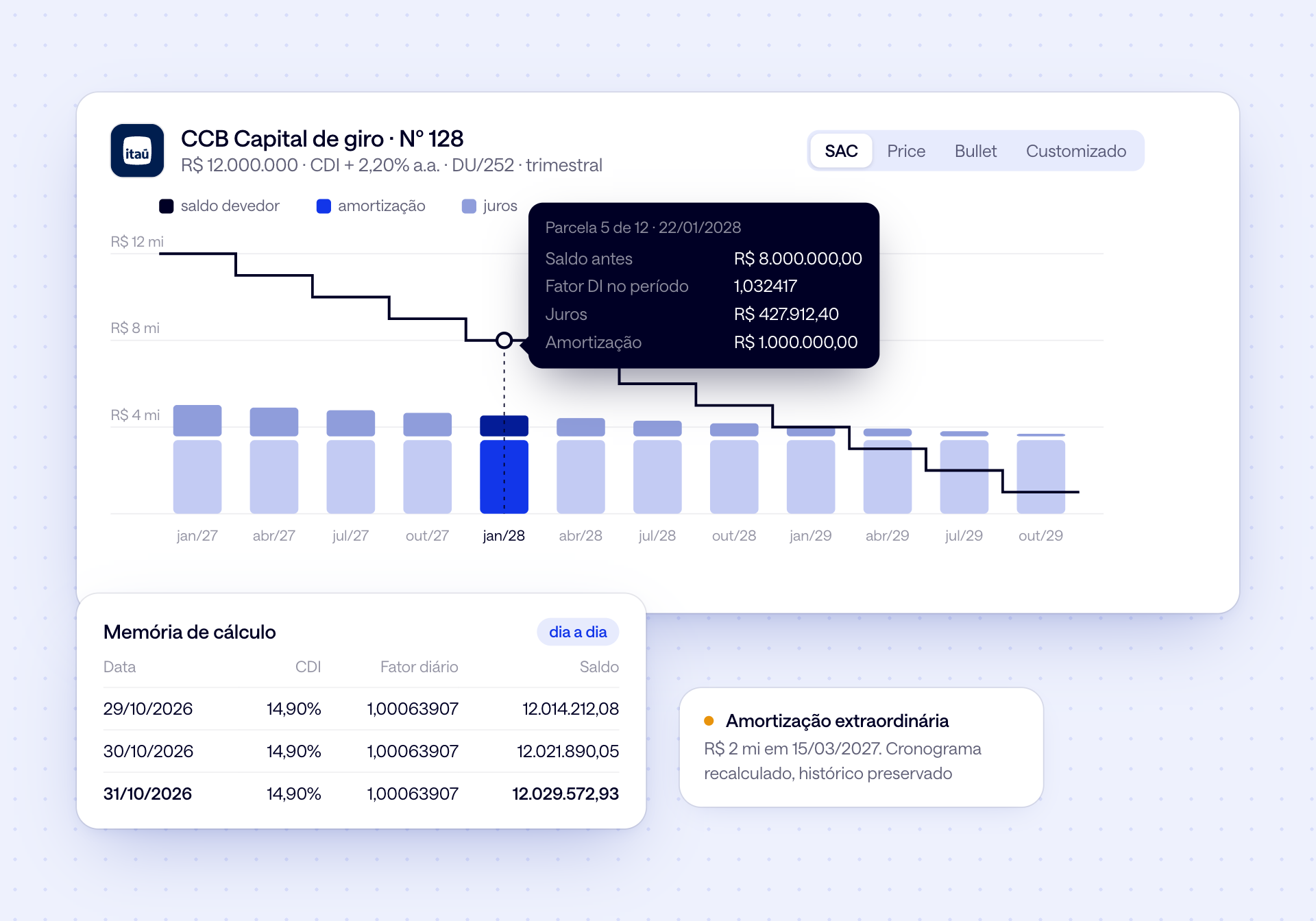
SAC, Price, Bullet or custom schedules, interest under the contract's convention (DU/252 or 30/360), grace periods and early amortization events. All with a line-by-line calculation trail.
3. You track what matters
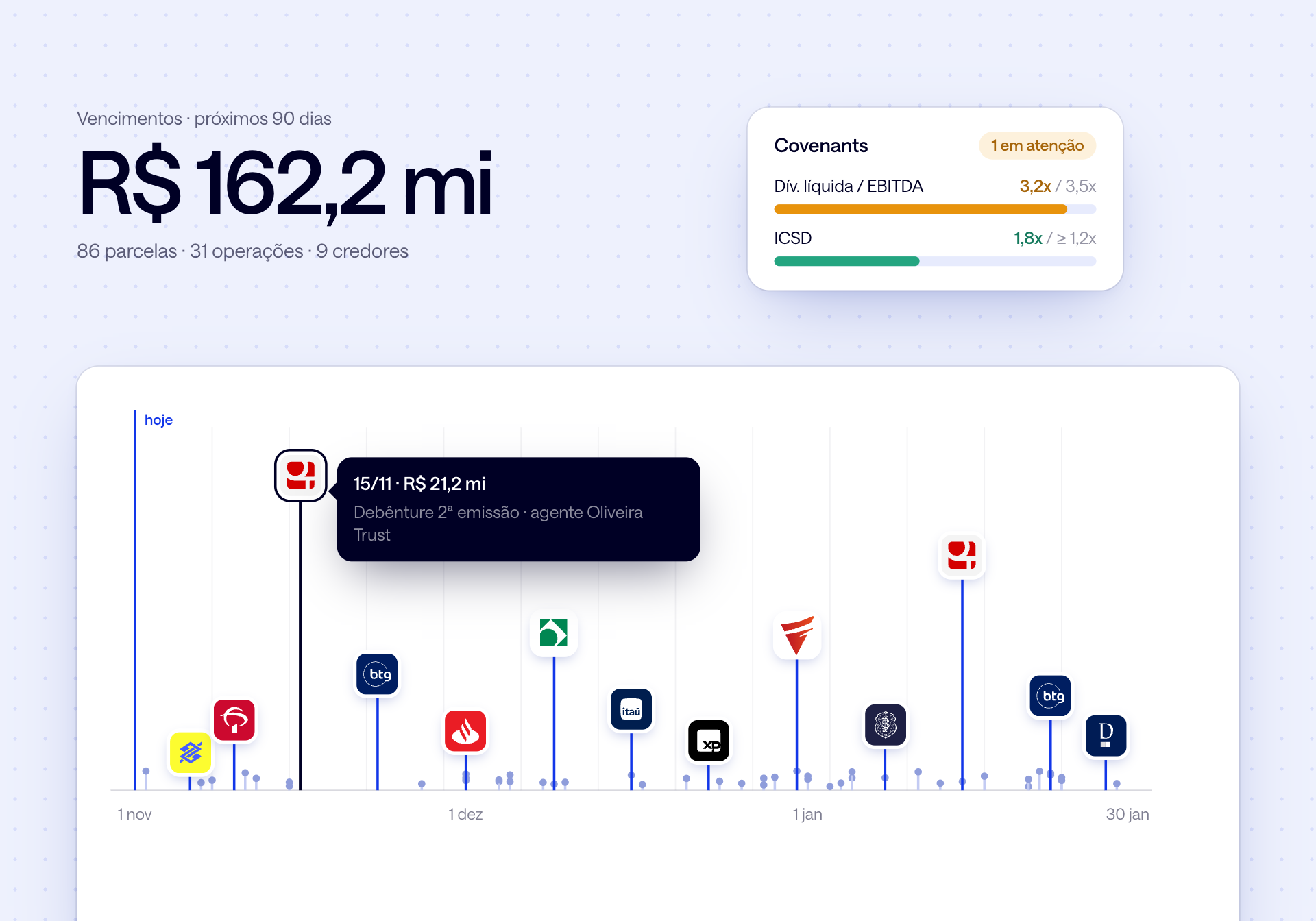
Maturities over the next 90 days, concentration by lender and index, covenants on watch and the outstanding balance rollforward to close the month.
Every treasury question has a screen.
What you owe, what it costs, what's due, is it closed? From the group consolidation down to each contract's events.
What you owe
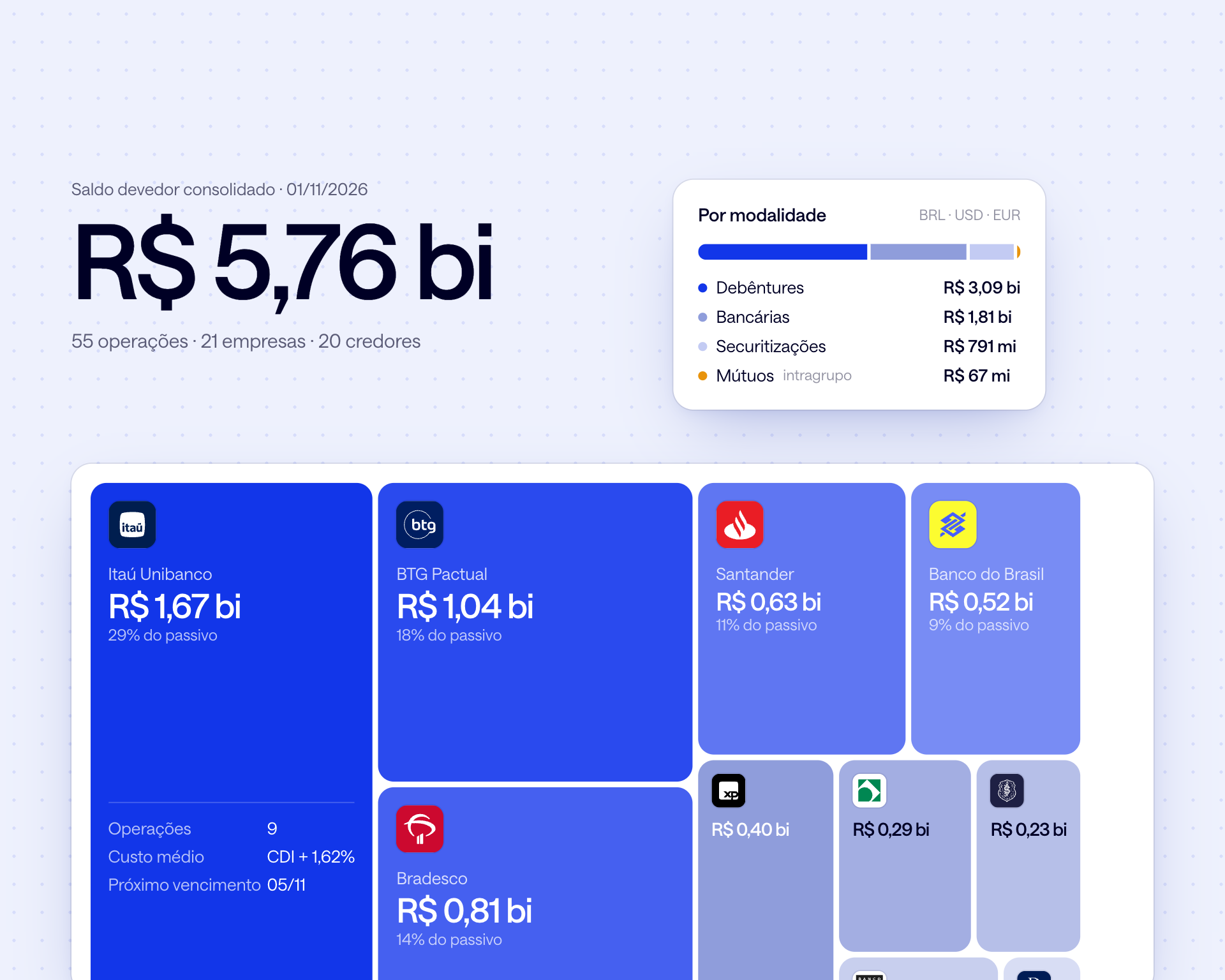
Consolidated outstanding balance by company, lender, type and currency, with the mix of bank loans, debentures, securitizations and intercompany loans. Each operation's detail is one click away.
What it costs
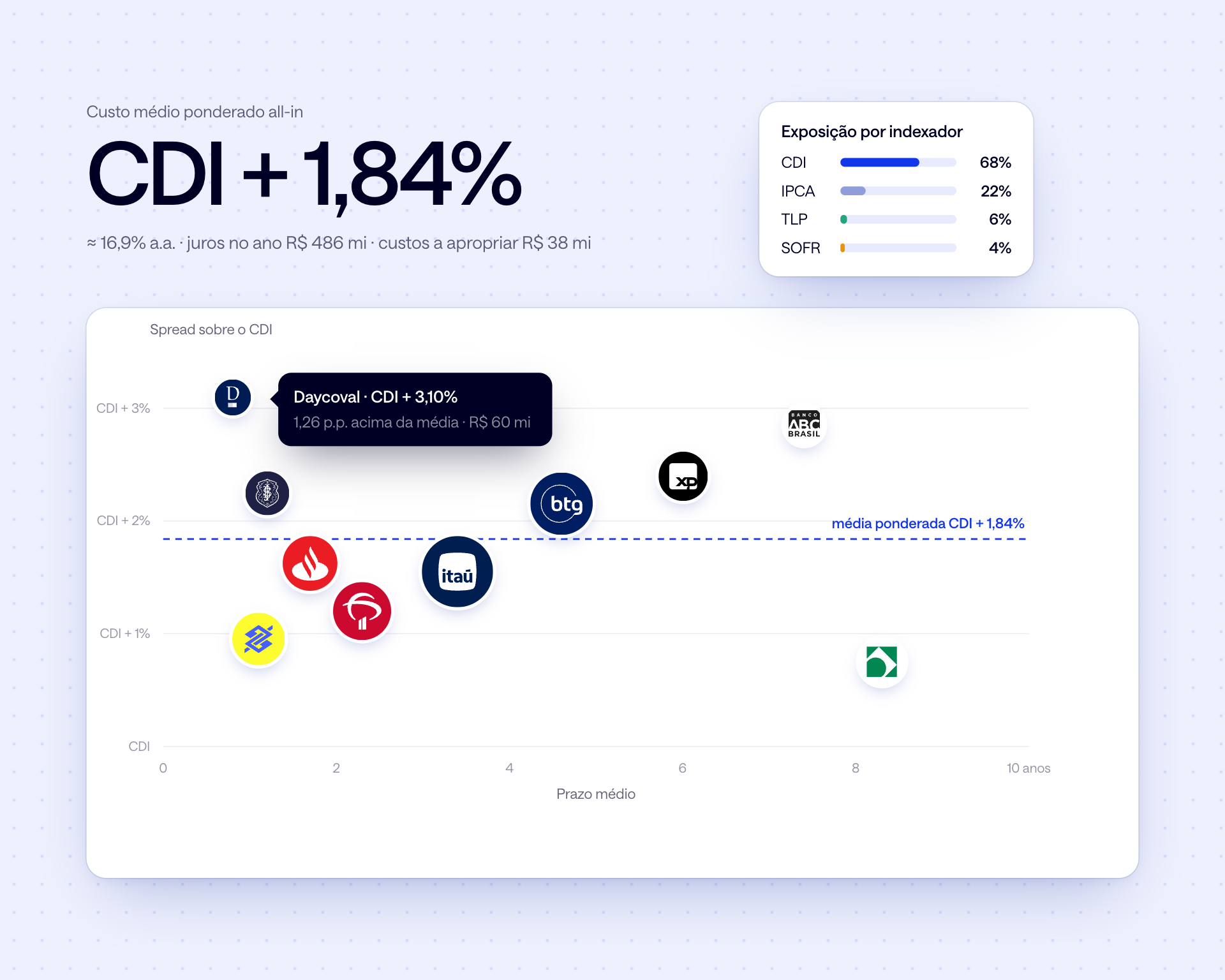
All-in weighted average cost, exposure by index, interest for the month and year to date, deferred funding costs and guarantee fees. All by bank, company or portfolio.
What's due
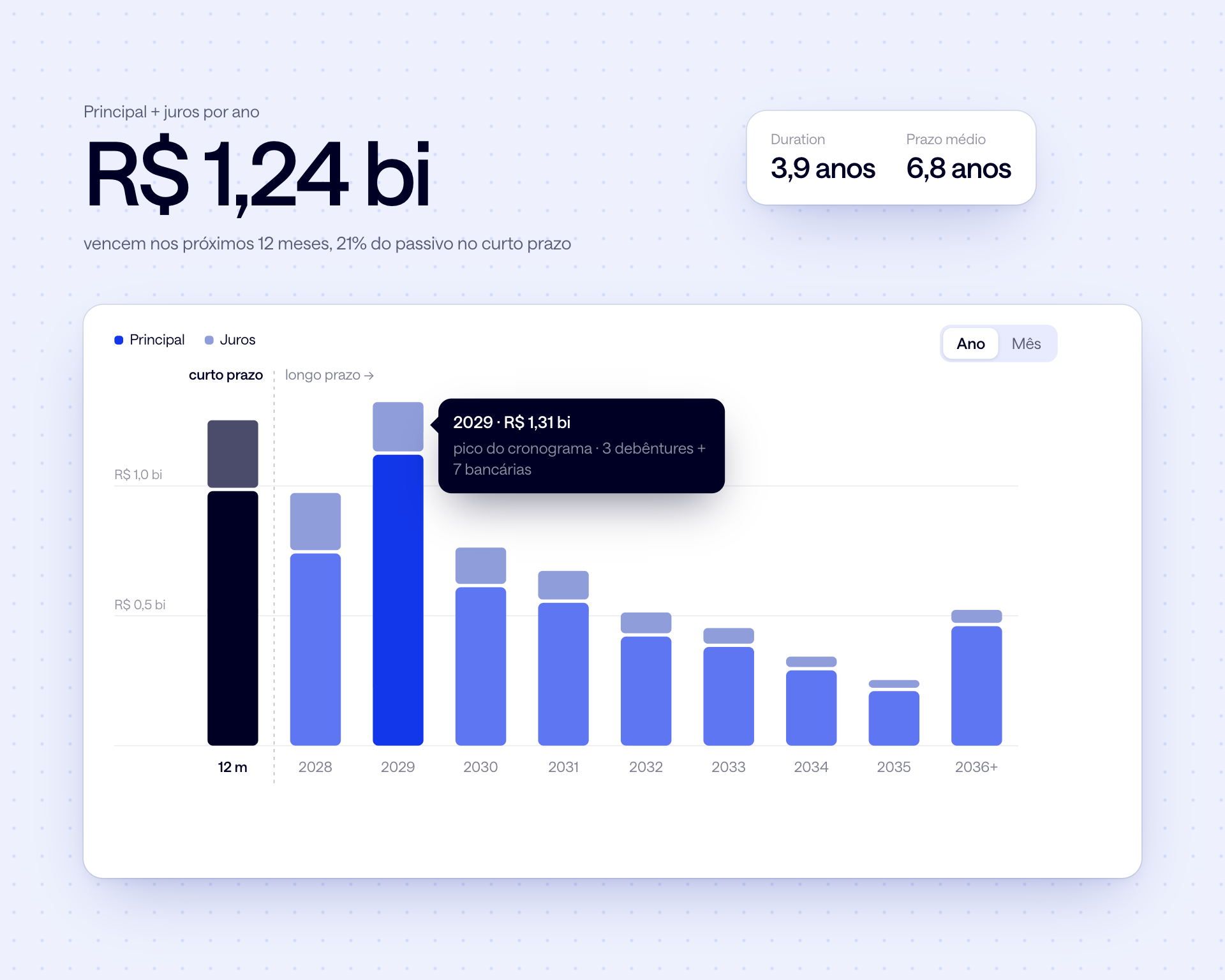
Principal and interest by year or month, short vs. long term, duration and average term, and the next 90 days installment by installment, with concentration by lender.
Covenants under watch
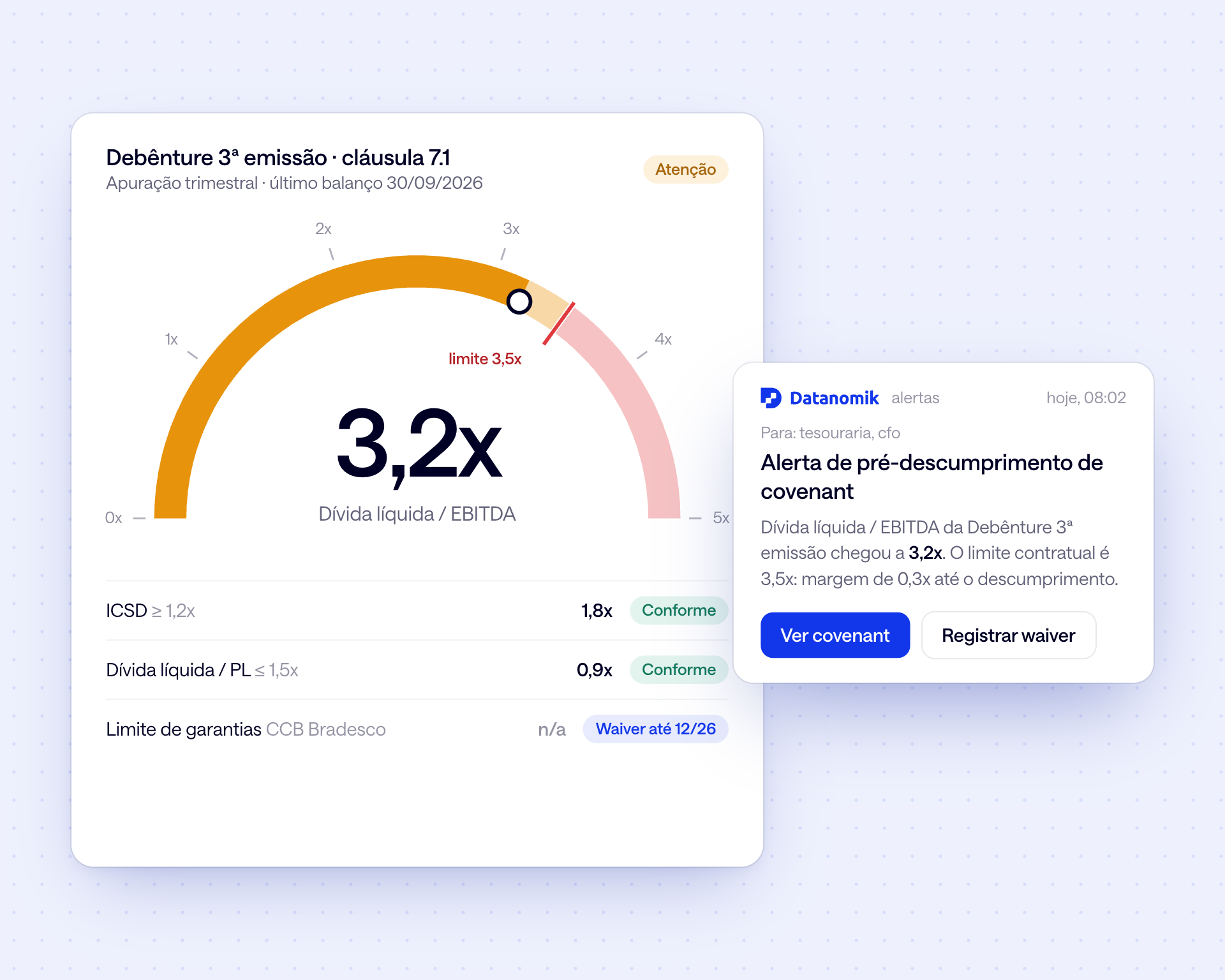
Register ratios such as Net Debt/EBITDA or DSCR on each contract. The platform re-evaluates with every new debt or measurement, classifies it as compliant, attention, breached or waiver, and emails whoever you choose.
Is it closed?
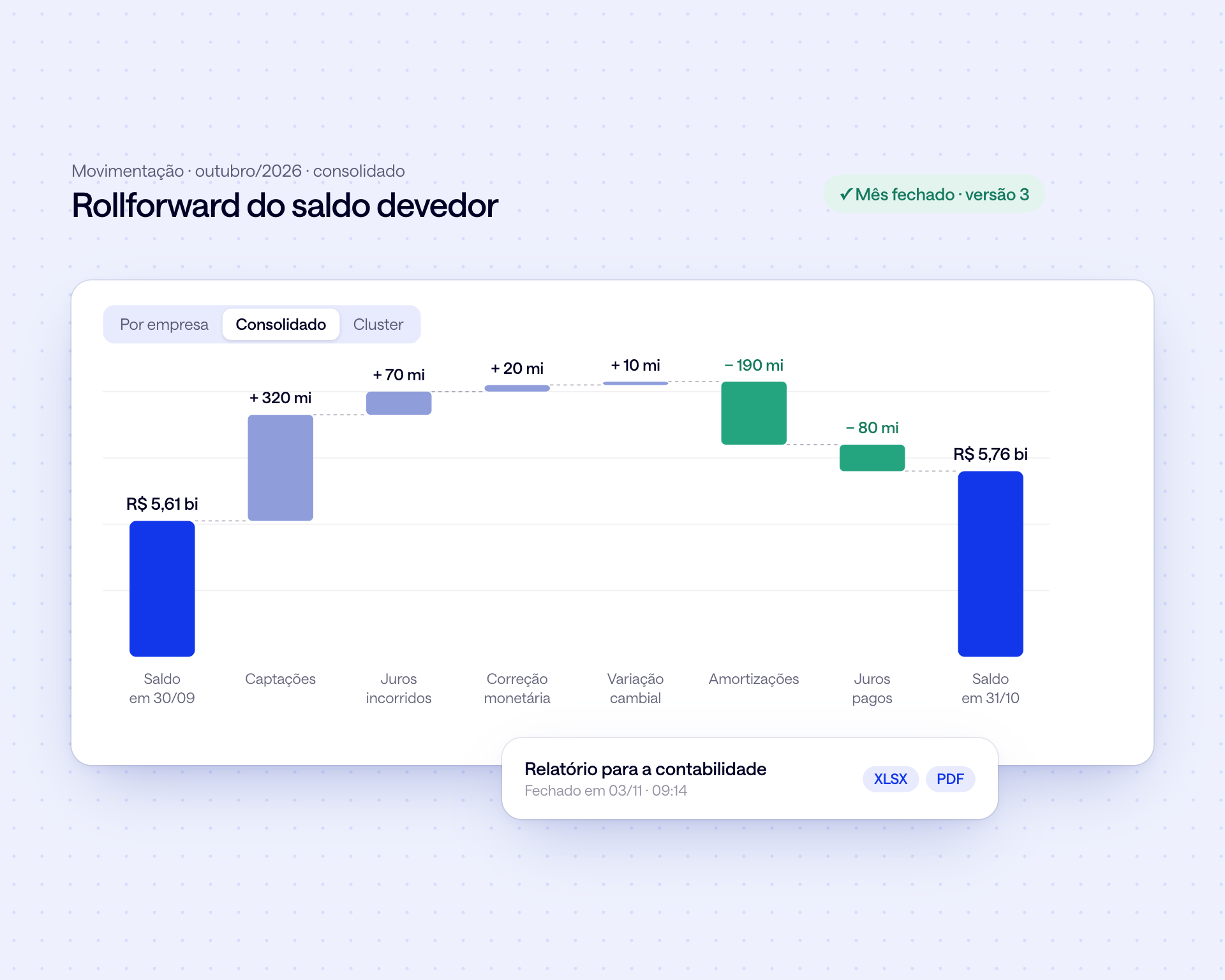
Monthly rollforward of the outstanding balance (new funding, amortizations, interest accrued and paid, inflation adjustment and FX variation), with closing by company, consolidated or cluster, and reports ready for accounting.
Frequently asked questions
Which types of debt does the module cover?

Bank loans (working capital, CCB, overdraft facilities, leasing, FINEM and FINAME, 4131 loans), debentures, CRIs and securitizations, commercial notes and intercompany loans. In reais, dollars or euros, with linked guarantees and collateral.
Do I have to enter everything by hand?
No. Debentures and CRIs come pre-filled from the series code using the ANBIMA/B3 catalog, with each field tagged by source. Bank loans can be imported from the contract PDF, read by AI, with the fields reviewed before saving. During onboarding, we also bulk-load your current portfolio.
How are interest and outstanding balance calculated?
A calculation engine recalculates each operation daily with the official indexes, following the compounding convention (DU/252 or 30/360), index lag, grace period and amortization system (SAC, Price, Bullet or custom schedule). Every operation has a day-by-day calculation trail and, for debentures, the engine's unit price is compared with the trustee's and the ANBIMA indicative price.
What if reality differs from the contract?
Record events: early amortization, rate renegotiation, partial or late payment. The engine recalculates the schedule, keeps the history and shows the impact of retroactive changes on months already closed.
How do covenants work?
Each obligation is registered on the contract with its indicator, limit and measurement frequency. The platform re-evaluates automatically when a new debt comes in or a measurement is recorded, flags attention, pre-breach and breach, records lender waivers and sends email alerts.
Does it work for the accounting close?
Yes. The Movements view provides the monthly rollforward (new funding, amortizations, interest accrued and paid, inflation adjustment, FX variation and cost amortization), with closing by company, consolidated or cluster, version history and reports you can export for accounting.
Ready to transform your treasury?
Fill out the form and our team will get in touch shortly.

Allan Andrade
Datanomik Treasury Manager